Most property investment advice is written for people buying in their home country. You know the market, you know the laws, you can drive past the property on a Sunday. International investing is a different game entirely. The markets that work on paper sometimes fail in practice, and the ones that look risky often deliver the best real-world returns.
Cash flow is what separates a good international investment from a bad one. Capital growth is hard to access when you are investing abroad - you cannot refinance as easily, and selling takes time. But rental income arrives every month regardless of what the market does. It covers your costs, services any debt, and generates actual returns you can use. It also gives you a buffer when something goes wrong, and something always goes wrong eventually.
The ten markets below were selected on yield, entry price, tourism fundamentals, and legal accessibility for foreign investors. They are not exotic bets - all ten have established rental markets, growing tourism numbers, and a track record of investor returns. Bali leads the list and gets the most coverage here because it earns it, not because this article was written by a Bali property company (though it was). The numbers justify the position.
Disclaimer: All yield figures and market data are based on current conditions as of early 2026. Property investment carries risk. Rental income is not guaranteed and varies based on location, property quality, management, and market conditions. This article is for informational purposes only and does not constitute financial advice. Always conduct independent due diligence and seek qualified professional advice before investing.
Why Cash Flow Beats Capital Growth for International Investors
The standard pitch for overseas property focuses on capital growth: buy now while it is cheap, sell in five years when prices have doubled. That pitch works when the exit is easy. In most emerging markets, it is not.
Foreign buyers often face restrictions on resale, currency controls, thin secondary markets, and tax complications that eat into whatever growth they captured. Many investors who bought in emerging markets on a capital growth thesis found themselves holding an appreciated asset they could not sell at a fair price, because the buyers were not there.
Cash flow solves this. When your property generates 12-18% net per year, you have already made most of your money back within a decade regardless of what happens to sale prices. The capital growth becomes a bonus rather than the thesis. In a year when global interest rates stayed elevated and Western property markets stalled, the markets on this list kept producing income because their fundamentals - tourism demand, supply constraints, lifestyle appeal - did not depend on cheap debt.
The 10 Markets
Ranked by overall investment case for international buyers in 2026, with rental yield as the primary metric.
#1 - Highest Net Yield
1. Bali, Indonesia
Net yields: 12-18% | Entry from: $199K USD | Best areas: Uluwatu, Canggu, Cemagi
No market on this list comes close to Bali on overall investor fundamentals. The yields are the headline number - 12-18% net per year on a well-designed, well-managed villa in the right zone - but what keeps Bali at the top of every serious investor list is the combination of factors driving those numbers. It is not one good metric. It is everything pointing in the same direction.
The tourism base
Bali received more than 7 million international visitors in 2024, and the trajectory is upward. The island has no meaningful off-season. Australian school holidays, European summer, Chinese New Year, Christmas and New Year - there is always a wave arriving. That matters for yields because sustained occupancy is what separates a great annual return from an average one. Most short-term rental markets have dead periods that drag the annual average down. Bali has shoulder months, but rarely dead ones.
The visitor profile has also shifted. Bali now attracts a significant number of longer-stay visitors - digital nomads, remote workers on one-to-three month stays, wellness retreaters who book full villas for two or three weeks at a time. These guests pay strong weekly rates, generate far less turnover cost than nightly bookings, and tend to leave properties in good condition. For investors in areas like Ubud and Pererenan, this demographic is increasingly the primary market.
Entry price and yield by area
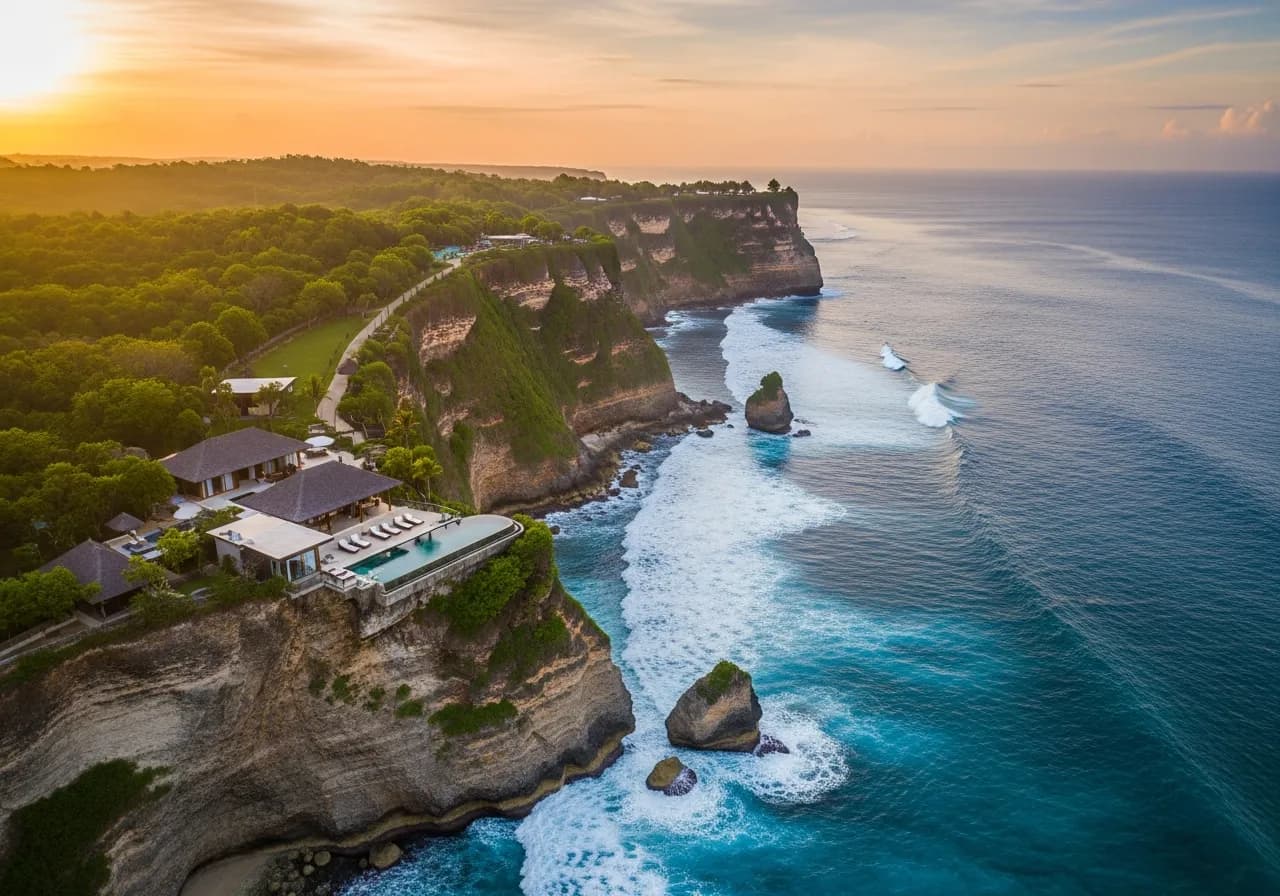
The entry price range is wide. At the accessible end, 2-bedroom villas in emerging areas like Cemagi start from around $199,000 USD for a leasehold development. Prime Uluwatu cliff-top villas with ocean views can run $500,000-800,000+. The sweet spot for yield relative to entry price sits in the $250,000-$400,000 range, where you are buying a well-designed 2-3 bedroom villa in a proven rental zone without paying the full premium for an ocean view.
| Area | Entry Price (2-bed) | Net Yield Range | Best For |
|---|---|---|---|
| Uluwatu | From $280K | 14-18% | Premium yields + capital growth |
| Canggu | From $320K | 12-16% | Highest occupancy volume |
| Cemagi | From $199K | 13-17% | Best entry price + upside |
| Seminyak | From $380K | 10-14% | Established market, high liquidity |
| Ubud | From $220K | 10-14% | Wellness tourism, longer stays |
The legal framework
Foreigners cannot hold Indonesian freehold title directly, but the legal structure for investment is mature and well-established. Most foreign investors use leasehold (Hak Sewa), which typically provides 25-30 years with renewal options bringing the total to 50-80 years. A 25-year lease purchased now takes you to 2051. For an investment bought at today's prices and generating 14% net per year, you have recouped your capital three times over by the time the lease expires.
The other key legal requirement is the Pondok Wisata (short-term rental) licence, which the property must hold to legally operate as a holiday villa. This requires the property to be in a designated tourism zone - the "Pink Zone" on Bali's spatial plan. Not all land qualifies, which is precisely why buying from a licensed developer who operates in confirmed tourism zones matters. Every Balitecture development is built in a Pink Zone from day one.
The Balitecture track record
We have built and managed 200+ villas across Bali over more than a decade. Our Google rating sits at 4.9 from 184 verified reviews, and we are an Asia Pacific Property Awards winner. That matters not as a credential exercise but because track record is how you evaluate any property developer in an emerging market. Anyone can show you renders. Far fewer can show you occupied, income-producing properties they designed, built, and continue to manage.
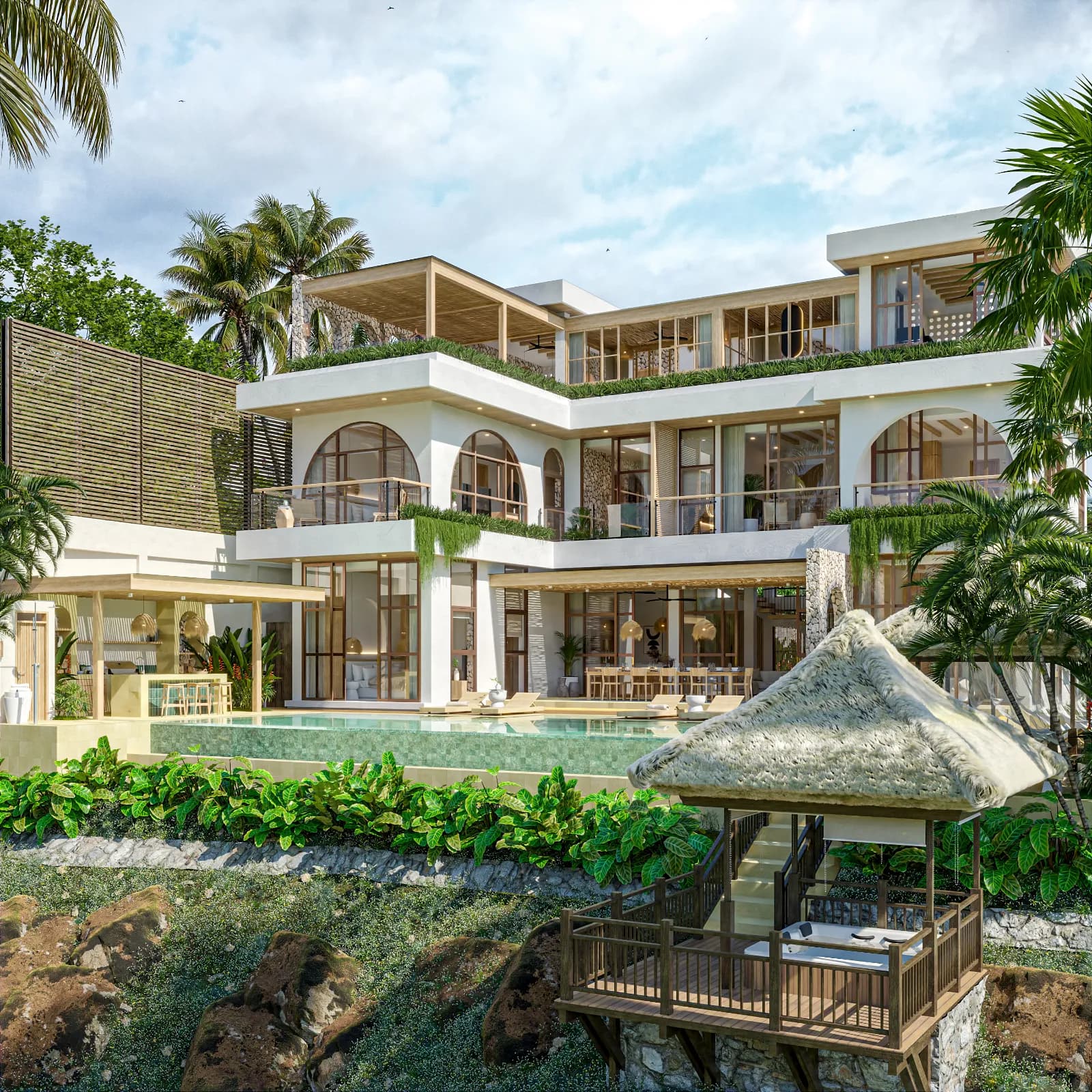
Our current developments include Nara Villas in Uluwatu, with 2-bedroom units from $199,000 and 3-bedroom units from $260,000. Each villa is designed for rental from the ground up - separate bedroom wings, pool-facing living areas, low-maintenance finishes, and full Pondok Wisata licensing. We also provide ongoing villa management for investors who want a hands-off income stream.
Morgan Stanley flagged Indonesia as the second-best global real estate investment destination. Bali is the clearest expression of why. For investors serious about cash flow, it is the most compelling market on this list by a meaningful margin.
12-18%
Net Annual Yield - Best Bali Locations
2. Chiang Mai, Thailand
Net yields: 8-12% | Entry from: $80K USD | Best areas: Nimman, Old City surrounds, Hang Dong
Chiang Mai is the affordability play on this list. Entry prices are among the lowest of any established tourism market in Southeast Asia, and the digital nomad community that has built up around the Nimman district over the past decade means rental demand is deep and year-round. The appeal is consistent: low cost of living, fast internet, strong expat infrastructure, and easy Thai visa options.
Yields on well-positioned condominiums and small villas run 8-12% net. The ceiling is lower than Bali because nightly rates are lower - Chiang Mai does not have the luxury villa market that Bali or Phuket do. What it has is reliable occupancy from monthly renters who stay 30-90 days. A studio or one-bedroom apartment renting for $600-800 per month on a steady 85% annual occupancy delivers a yield that most Western markets cannot touch.
Foreign ownership of condominiums in Thailand is permitted up to 49% of a building's units, making the legal pathway cleaner than most Southeast Asian markets. The main risk: Chiang Mai's appeal is heavily concentrated in a narrow demographic of younger remote workers. Any shift in Thailand's visa policy or the remote work trend could soften demand faster than in more diversified tourism markets.
3. Tbilisi, Georgia
Net yields: 9-13% | Entry from: $60K USD | Best areas: Vera, Vake, Mtatsminda
Tbilisi is probably the most underappreciated city on this list. Georgia permits foreigners to buy property freehold with no restrictions - one of the few countries in the world where the ownership framework is genuinely equal for foreign and local buyers. That alone puts it ahead of many competitors. Add yields of 9-13% net, entry prices starting around $60,000 for a city apartment, and a rapidly growing tourism industry, and the investment case builds quickly.
Georgia's flat 1% annual property tax and no capital gains tax on property held more than two years make the ongoing cost of ownership low. The short-term rental market in central Tbilisi is active and well-established, driven by European city-break tourism, wine tourism (Georgia claims to be the birthplace of wine), and an influx of remote workers who arrived post-2022. Occupancy in prime areas runs 70-80% for a well-listed apartment.
The main concern is geopolitical. Georgia sits in a complex regional context, and while Tbilisi itself is stable and safe, some investors factor in a risk premium. Entry prices reflect this. For investors who have done their research and are comfortable with the risk profile, the return per dollar invested is hard to match outside Southeast Asia.
4. Medellin, Colombia
Net yields: 8-12% | Entry from: $100K USD | Best areas: El Poblado, Laureles, Envigado
Medellin's transformation over the past two decades is well documented. The city that spent most of the 1990s as a byword for danger is now on nearly every "best city to live abroad" list. That shift brought a wave of foreign investors, and the Airbnb market in El Poblado and Laureles has become genuinely competitive. Yields run 8-12% net with occupancy rates of 70-80% for a well-positioned apartment.
Foreign ownership is unrestricted in Colombia, and the legal process for purchasing is relatively straightforward. Currency risk is the main variable - the Colombian peso has been volatile against the USD, and rental income earned in pesos can fluctuate in real terms. Investors who price their rentals in USD (common for the expat and tourist market) are partially insulated.
The city's ongoing growth depends on continued political stability and the strength of its appeal to foreign visitors and residents. Both look solid for now. Medellin has one of Latin America's strongest innovation ecosystems, which drives year-round professional travel in addition to tourism.
5. Porto, Portugal
Net yields: 6-9% | Entry from: $200K USD | Best areas: Ribeira, Bonfim, Foz do Douro
Porto offers the European rule-of-law and Eurozone stability that some investors want, combined with yields that are well above what you would earn in Paris, Amsterdam, or Berlin. Short-term rental in Porto's historic centre runs 6-9% net, driven by a tourism market that grew more than 40% over the past five years and shows no sign of slowing.
Portugal's non-habitual resident tax regime (restructured in 2024) still offers some advantages for foreign income earners, though it is less generous than its earlier iteration. The D7 passive income visa and the Golden Visa program (now limited to funds and renovation projects, not residential property) have kept Portugal on the radar of international investors who want EU residency options alongside their investment.
The limitation is regulatory risk. Lisbon has already imposed strict controls on new short-term rental licences. Porto has followed with tighter regulation in some historic areas. Investors need to verify the licensing status of any property before buying - a unit without a valid rental licence in a restricted zone is worth substantially less than one with it.
Bali Investment
Bali Beats Every Market on This List
See our current Bali developments, income projections, and investment packages. Nara Villas in Uluwatu from $199,000 USD.
6. Cape Verde (Sal Island)
Net yields: 7-10% | Entry from: $120K USD | Best areas: Santa Maria, Murdeira Bay
Cape Verde does not get enough attention from property investors outside the UK and Portuguese markets. Sal Island runs on tourism - specifically the kind of volume sun-and-beach European charter tourism that keeps occupancy high through winter when Northern European demand peaks. British, German, and Scandinavian visitors arrive in large numbers from October through April, which is exactly when most other markets slow down.
Foreign ownership is unrestricted, and prices are low relative to other Atlantic island markets. A two-bedroom apartment near Santa Maria beach starts from around $120,000. Yields of 7-10% net are achievable on properties managed through the established resort rental pools. The infrastructure is simpler than most - Cape Verde runs on tourism, the property management industry is tuned for it, and the British and Irish investor community has created a functioning secondary market.
The ceiling is the limited upside. Cape Verde is not going to become Bali. The appeal is a specific, narrow tourism market, and long-term capital growth depends on continued airlift. For investors who want steady income with low management complexity and no time zone headaches (Cape Verde is on GMT), it works well.
7. Lisbon, Portugal
Net yields: 5-8% | Entry from: $320K USD | Best areas: Alfama, Principe Real, Belem
Lisbon ranks below Porto on this list because entry prices are higher and the regulatory environment for short-term rentals is tighter. The city has placed a moratorium on new Alojamento Local (short-term rental) licences in most central districts, which means only properties with existing licences are viable for Airbnb-style rental. That restriction actually works in favour of licence holders - supply is capped, which supports occupancy and rates.
Yields of 5-8% net are achievable on licensed properties in prime areas. That is not spectacular compared to Southeast Asia, but Lisbon offers something the other markets on this list largely do not: a deep, liquid secondary market. You can sell a Lisbon apartment to a European buyer fairly easily. The exit is as clear as the entry.
For investors who want European stability and are willing to accept lower yields in exchange, Lisbon remains one of the stronger options in Western Europe. Just verify the rental licence status before committing to any purchase.
8. Phuket, Thailand
Net yields: 7-11% | Entry from: $180K USD | Best areas: Kamala, Rawai, Bang Tao
Phuket is the most obvious comparison point for Bali, and on some metrics it competes well. Thailand's condominium freehold law is cleaner and simpler than Bali's leasehold structure for foreign buyers. Nightly rates in the prime beachside areas are strong, particularly for larger villas targeting the group and family market.
But Phuket's market has matured, and supply has expanded significantly over the past decade. The villa stock has grown faster than visitor numbers in some segments, which has compressed yields from the 12-15% levels investors saw in the mid-2010s. Well-managed properties in the right areas still produce 8-11% net, but the margin for error is thinner than it was. Buying a poorly located or poorly managed property in Phuket carries more downside than the equivalent mistake in Bali.
Phuket also has a more pronounced seasonality than Bali. The low season (May to October) brings the monsoon, and occupancy drops sharply for villas that rely on the beach and pool lifestyle. Properties near Rawai and Nai Harn, which are less affected by the west coast weather, tend to hold occupancy better through the wet season.
9. Tulum, Mexico
Net yields: 8-13% | Entry from: $200K USD | Best areas: Aldea Zama, La Veleta, beach road
Tulum has gone from a backpacker stop on the Mayan Riviera to one of the most searched short-term rental destinations in the world, and the property market has moved with it. Yields of 8-13% net are achievable on boutique villas and condominiums in the right areas. The US and Canadian visitor market is large, arrives with high daily spending budgets, and books well in advance.
The challenges are well documented. Infrastructure has not kept pace with development - water, power, and road access are issues in some areas. Environmental concerns about construction near the cenote network and coastal mangroves have led to legal disputes over some developments, and a number of buyers have found their projects stalled or cancelled. Supply of new villas is significant, which means occupancy is harder to maintain than it was when Tulum was newer to the international market.
Buying from an established, reputable developer matters more in Tulum than almost anywhere else on this list. The legal and environmental risk of getting this wrong is real. For buyers who do their due diligence carefully and buy in the right areas, the yield potential is genuine. For those who cut corners on legal review, it can be expensive.
10. Kotor, Montenegro
Net yields: 6-9% | Entry from: $150K USD | Best areas: Old Town, Dobrota, Prcanj
Montenegro is the dark horse of European property investment, and Kotor sits at the centre of the country's tourism growth. The Bay of Kotor is a UNESCO World Heritage site. The cruise ship route stops here. Summer tourism from Western Europe has grown consistently, and Montenegro's EU accession process (ongoing as of 2026) is gradually improving confidence in the legal and investment framework.
Foreign ownership is unrestricted, entry prices are lower than comparable Adriatic markets in Croatia, and yields of 6-9% net are achievable in high season. The catch is the season itself - Kotor is heavily summer-dependent. Outside June to September, rental demand drops substantially, and annual yields reflect that. This is genuinely a seasonal market rather than a year-round one.
For investors looking for a European vacation property that pays its own way through summer rental income, Kotor is worth considering. For those focused purely on maximum annual yield, the other markets on this list deliver more consistent returns.
Side-by-Side Comparison
| Market | Net Yield | Entry From | Foreign Ownership | Seasonality |
|---|---|---|---|---|
| Bali, Indonesia | 12-18% | $199K | Leasehold / PMA | Year-round |
| Chiang Mai, Thailand | 8-12% | $80K | Condo freehold | Year-round |
| Tbilisi, Georgia | 9-13% | $60K | Full freehold | Year-round |
| Medellin, Colombia | 8-12% | $100K | Full freehold | Year-round |
| Porto, Portugal | 6-9% | $200K | Full freehold | Strong summer |
| Cape Verde | 7-10% | $120K | Full freehold | Strong winter |
| Lisbon, Portugal | 5-8% | $320K | Full freehold | Strong summer |
| Phuket, Thailand | 7-11% | $180K | Condo freehold | Oct - Apr peak |
| Tulum, Mexico | 8-13% | $200K | Full freehold | Dec - Apr peak |
| Kotor, Montenegro | 6-9% | $150K | Full freehold | Jun - Sep only |
How to Choose Where to Invest
The right market depends on your situation. Here is the framework we use when talking to investors:
Start with your risk tolerance on legal structure
Full freehold ownership in a country with strong rule of law (Portugal, Montenegro, Georgia, Colombia) carries less legal complexity than leasehold structures in Indonesia or villa ownership in Thailand. If you need the simplest possible ownership structure, that narrows the field. If you are comfortable with a well-structured leasehold, Bali becomes available - and the yield gap justifies the extra legal work.
Decide whether you need year-round income
If your investment needs to cover a mortgage or generate consistent monthly cash flow, avoid the seasonal markets (Kotor, Cape Verde's high seasons). Bali, Chiang Mai, Tbilisi, and Medellin all have year-round demand from diverse visitor types. The annual income is more predictable, and low-season gaps are smaller.
Set a realistic entry budget before you start
Some of the best-yielding markets require $300,000+ to access quality property in the right areas. Others work at $100,000. Be honest about your budget and look at the markets where you can buy a good property, not just any property. A $150,000 investment in a strong location will outperform a $500,000 investment in a weak one.
Consider how hands-on you want to be
Markets with established management infrastructure - Bali, Phuket, Porto - let you be largely passive. Emerging or thinner markets may require more direct involvement to manage properly, especially early on. If you are investing from Australia, Europe, or Asia and cannot visit regularly, choose a market with strong professional management options.
Factor in currency and repatriation
Rental income earned in Indonesian rupiah or Colombian peso introduces currency risk that income in euros or Thai baht (more stable) does not. Some investors price their Bali rentals in USD to reduce this. Others accept local currency income and manage it as part of the total risk profile. This is worth discussing with a specialist before committing.
Why Bali Ranks First
Every market on this list has something going for it. Tbilisi has freehold ownership and 9-13% yields. Tulum has strong US dollar demand. Porto has European legal security. None of them combine all the factors that make Bali the standout.
Bali has 7 million-plus annual visitors with no meaningful off-season. It has a global brand that no other market on this list can match - Bali is the destination, not just a destination. It has entry prices low enough that $199,000-$400,000 buys you a genuine, income-producing luxury asset. And it has yields of 12-18% net that simply do not exist at comparable entry prices in any established Western market.
The legal complexity is real. Leasehold requires proper structuring, and the Pondok Wisata licensing requirement means not every property qualifies for short-term rental. But these are navigable issues with the right team, not fundamental barriers. Thousands of foreign investors have successfully bought, built, and operated income-producing villas in Bali. The path is well-worn.
For international investors focused on cash flow in 2026, Bali is the answer. The yield premium over every other market on this list is too large to ignore, and the fundamentals supporting those yields - tourism growth, supply constraints in the top zones, lifestyle demand - are structural rather than cyclical.
7M+
Annual Visitors
12-18%
Net Yield
$199K
Entry Price
200+
Villas Built