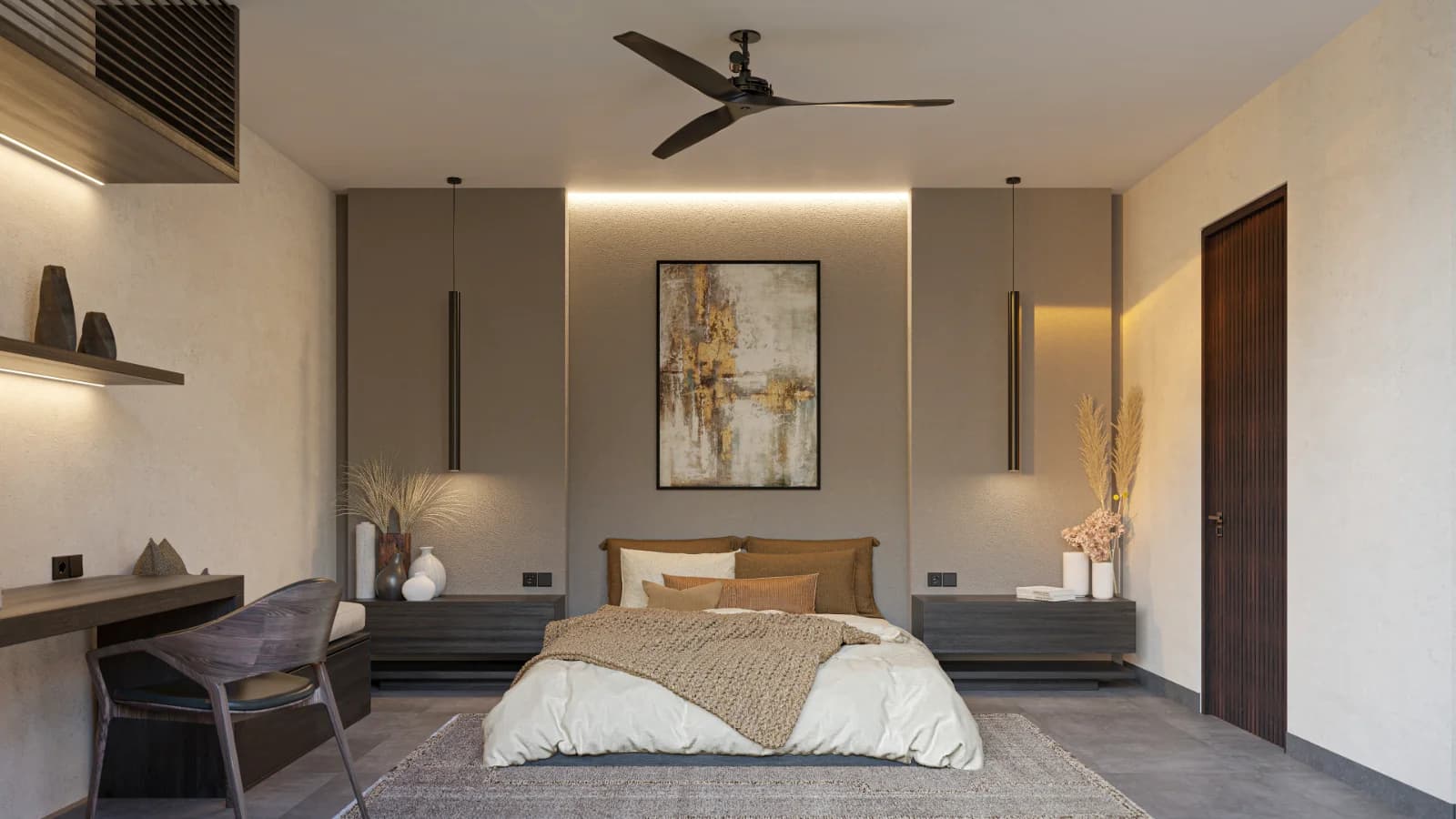
Most Bali property conversations start and end at the coast. Canggu, Uluwatu, Seminyak. That's where the surf breaks are, where the beach clubs are, where the Instagram-worthy infinity pools hang over the ocean. Makes sense.
But Ubud has been quietly building a property investment case that deserves more attention than it gets. Lower entry prices. A guest profile that actually spends more per stay. Less competition than the coast. And a wellness tourism market that has been growing faster than almost any segment in Southeast Asia travel.
We build across Bali - including in Ubud. This guide covers what the numbers look like, how Ubud compares to south Bali alternatives, which pockets make the most sense for a villa investment, and who the guests actually are. No inflated projections.
Disclaimer: All figures in this article are illustrative and based on current market conditions as of early 2026. Rental income is not guaranteed and varies based on property quality, management, location, and occupancy. Always conduct independent due diligence before investing.
What Makes Ubud Different
Ubud is not a beach town that happens to have temples. It is a cultural and wellness destination that has been drawing international travellers since the 1980s - long before Canggu was anything more than a rice farming village. That history creates a different kind of traveller, and a different kind of property market.
Wellness tourism is the fastest-growing segment in Bali travel
Globally, wellness tourism is now a $1.8 trillion industry. Bali is one of its most recognised destinations - and Ubud is where that reputation lives. Guests come for Balinese healing rituals, yoga teacher trainings, plant-based retreats, sound healing, water purification ceremonies at Tirta Empul. It reads like a niche, but the volume is substantial and the growth rate has been consistently ahead of standard leisure tourism.
For a villa investor, this matters because wellness travellers behave differently. They book longer stays - 5-10 nights is normal in Ubud vs 3-5 nights on the coast. They spend more at the property itself (in-villa massages, private chefs, yoga sessions). And they tend to leave better reviews because the experience aligns with why they came.
The setting does serious work
A villa with rice terrace views in Ubud photographs completely differently from a beach villa in Canggu. It appeals to a different emotional trigger. The guest booking an Ubud villa with a jungle valley view and a private infinity pool is not comparing it to a Canggu surf villa - these are different markets. That separation means less direct competition on OTA platforms and more ability to command rates on the strength of your setting.
Areas like Sayan and Penestanan offer views of the Ayung River valley that no amount of money can replicate on the coast. That scarcity has real value.
Year-round appeal, not just dry season
Coastal Bali relies on dry season (May to October) and the Christmas period. During Bali's wet season - February and March specifically - beach towns see occupancy drop off sharply. Ubud is less affected. The appeal is not weather-dependent in the same way. Wellness retreats run year-round. Cultural events and ceremonies happen throughout the calendar. Digital nomads working remotely do not care if it rains. The result is more consistent cash flow across 12 months, which changes how the investment math works.
The Investment Numbers for Ubud
Here is what the market actually looks like right now for well-designed, properly managed villas in Ubud's prime areas.
Entry price
From $199K
Net yield
10-14%
Avg stay
5-10 nights
Occupancy
65-80%
Villa prices in Ubud (2026)
Leasehold land in Ubud's prime investment areas runs $250-500 per sqm depending on location - Central Ubud commands the top of that range, while Sayan, Kedewatan and Penestanan sit closer to $300-400/sqm. A fully serviced leasehold plot in Penestanan or Sayan suitable for a 2-bedroom villa typically costs $65,000-100,000 USD. Add construction and furnishing and you can have a complete, rental-ready villa for $199,000-349,000 USD depending on bedroom count and spec level.
Compare that to Canggu, where land alone at comparable quality is often $300,000+, or Uluwatu where the total investment on a 2-bedroom starts around $280,000 for a modest build. Ubud's lower entry point means more investors can get in, and the yield math often works in your favour even at lower nightly rates.
Nightly rates and occupancy
| Villa type | Nightly rate | Annual occupancy |
|---|---|---|
| 2-bed, rice field view, private pool | $120 - $220/night | 68-75% |
| 3-bed, valley view, infinity pool | $200 - $350/night | 65-78% |
| 4-bed, premium location, full amenities | $300 - $600/night | 60-72% |
Nightly rates in Ubud are lower than Uluwatu's cliff-top premium, but the longer average stays offset some of that gap. A guest who books 8 nights at $160/night generates $1,280 in revenue with one set of check-in/check-out cleaning costs. A guest who books 3 nights at $220/night generates $660 with the same cost structure. The maths are more nuanced than just comparing nightly rates.
~12%
Estimated Net Yield on a $199K Ubud Villa Investment
On a $199,000 investment like our Umah Ubud 2-bedroom villa, hitting $160 nightly at 70% occupancy generates roughly $40,880 gross per year. After management fees (20%), staff, maintenance, utilities, and licensing costs, you are looking at approximately $23,500-26,000 net. That's a net yield of around 12% on total investment - competitive with anywhere in Bali and significantly ahead of Sydney, London, or Singapore residential property.
These figures are illustrative. Actual returns depend on management quality, occupancy, and market conditions. Always model your own scenarios before committing.
Ubud vs South Bali: Not Either/Or
The comparison investors keep making is Ubud vs Canggu or Ubud vs Uluwatu, as if you have to pick a side. It is actually more useful to think about what each area does well and who they serve.
| Factor | Ubud | Canggu | Uluwatu |
|---|---|---|---|
| Entry price (2-bed) | From $199K | From $280K+ | From $280K |
| Net yield | 10-14% | 10-15% | 12-18% |
| Avg guest stay | 5-10 nights | 3-5 nights | 4-7 nights |
| Wet season occupancy | Holds steadier | Drops noticeably | Drops noticeably |
| Land price growth | 8-15%/yr | 8-12%/yr | 15-25%/yr |
| Market saturation | Lower | High | Medium-High |
| Airport distance | 75-90 min | 35-45 min | 45-60 min |
Uluwatu still wins on capital growth potential - the Pink Zone designation and constrained clifftop supply create dynamics that Ubud can't match. If your primary goal is long-term land appreciation, Uluwatu or Cemagi make more sense.
But if you want a lower entry price, steadier year-round cash flow, and exposure to a guest market that nobody in your building is competing with, Ubud makes a genuine case. It is less saturated than Canggu and the OTA landscape for Ubud wellness villas is less crowded than beach villas.
For investors building a portfolio, Ubud and a coastal holding are complementary. They fill different seasons, attract different demographics, and balance each other's weaknesses.
Specific Advantages Ubud Has Right Now
Lower entry, less competition
Canggu is saturated. Walk Batu Bolong and you will see villa after villa competing on the same Airbnb search page. Ubud's wellness villa market is smaller and less crowded, which means a well-designed property with strong photography and active management can reach the top of search results faster. For a new investor without an established listing history, that matters.
The wellness and retreat market keeps growing
Since 2020, wellness travel has grown at roughly double the rate of standard leisure tourism. Bali - and Ubud specifically - is on every major "wellness destination" list. COMO Shambhala, Fivelements, and a dozen smaller retreat centres have built Ubud's international profile in this space. That infrastructure supports your rental villa's positioning. Guests arrive in Ubud already primed to spend on experiences, and a villa with a private pool and rice field views fits directly into that mindset.
Rice field and jungle views that coastal areas can't offer
This is more than aesthetics. The visual identity of an Ubud villa - terraces, jungle, river valley, morning mist - is genuinely irreplaceable. Guests searching for this specific experience have no alternative. You are not competing with Seminyak or Canggu properties on their search. You are in your own category, which gives you pricing power that a generic beach villa does not have.
Who Stays in Ubud Villas
Understanding your guest is the fastest way to optimise a rental property, and Ubud's guest mix is genuinely different from coastal Bali.
- Wellness travellers and yogis: Booking around retreat programs or yoga teacher trainings. Often staying 7-14 nights. Spend heavily on in-villa experiences - massages, private yoga, cooking classes.
- Honeymooners: Strong year-round demand, willing to pay for privacy and design quality. Ubud is one of Southeast Asia's top honeymoon destinations, and a villa with a freestanding bathtub and rice field views earns premium rates for this segment.
- Families: Multi-generational groups who want space, a private pool, and safe surroundings for children. Ubud's quieter roads and cultural activities make it more appealing to families than Canggu's party-heavy south end.
- Digital nomads seeking nature: Growing fast. Not the laptop-in-a-cafe crowd you see in Canggu - more the remote worker who wants to disappear into the jungle for a month, join a few yoga classes, and eat well. Monthly rental rates in Ubud work well for this group.
- Cultural travellers and repeat visitors: Guests returning to Bali specifically for its art, ceremony, and spiritual traditions. Ubud is the centre of that experience. These guests often book the same villa multiple times, which improves your direct booking rate over time.
Common thread across all of these: they are not the bargain hunter looking for the cheapest available villa. They are paying for an experience. A well-designed property earns meaningfully more than a generic build in the same location.
Best Areas Within Ubud for Investment
"Ubud" covers a lot of ground. The Ubud district spans rice paddies, forest, river valleys, and artisan villages. Not every corner is equally suited to short-term rental investment. Here is how the main pockets break down.
Penestanan
Just west of Ubud town, Penestanan sits on a ridge above the Campuhan river valley with rice field views in most directions. It is close enough to Ubud's restaurants and markets to be convenient, but far enough from the central tourist street (Jalan Raya Ubud) to feel genuinely peaceful. The area has an established expat community, which means reliable cafes, health food options, and yoga studios nearby.
Land in Penestanan has appreciated consistently over the past five years. It is not cheap - $300-450/sqm for prime plots - but there is still room relative to coastal areas, and the setting commands premium nightly rates.
Sayan
Sayan is where the Ayung River valley opens up into its most dramatic form. The Four Seasons Sayan put this area on the international map, and the luxury anchor effect is real - guests know the name, and a villa nearby benefits from that association. The views here, particularly from elevated plots, are among the best in all of Bali.
Infrastructure is thinner than Penestanan - fewer cafes walking distance - but guests who choose Sayan are specifically seeking the isolation and the landscape. They are less likely to be frustrated by a 5-minute scooter ride to a restaurant. The average nightly rate in Sayan outperforms most of Ubud.
Tegallalang
North of Ubud town, Tegallalang is famous for its UNESCO-listed rice terraces. If your marketing hook is "rice terrace views", this is the most literally accurate location for it. The area draws both day-trippers and overnight guests, and the terrace backdrop generates strong social media engagement - which helps self-marketing for villa rental.
The trade-off is distance from Ubud town (20-30 minutes) and from the airport (90+ minutes). Guests need to be comfortable with that, and your taxi pickup logistics need to be reliable. For the right buyer, the visual story Tegallalang offers is hard to beat.
Mas
Mas is on the main Ubud-Denpasar bypass road, roughly 10 minutes south of Ubud town. It is more accessible for airport transfers and has good road infrastructure. The downside: it lacks the dramatic setting of Penestanan or Sayan. It suits investors who prioritise accessibility and lower land prices ($200-350/sqm) over the premium visual story. Still generates solid yields, but at the lower end of the Ubud range.
Our current Ubud developments
Balitecture has two active developments in Ubud. Both are in licensed tourism zones, designed specifically for short-term rental performance, and available for purchase now.
From $199,000 USD
Umah Ubud
2-bedroom villa. Private pool. Designed for strong rental yields at an entry-level price point. Rice field and garden setting.
View Umah Ubud →From $349,000 USD
Dasa Ubud
3-bedroom villa. Infinity pool. Designed for the premium wellness traveller market with elevated architecture and rice field views.
View Dasa Ubud →What to Look For in an Ubud Villa Investment
The things that matter in Ubud are slightly different from the coast. Here is what separates strong performers from average ones.
View is your biggest marketing asset
On the coast, guests pick an area (Canggu, Uluwatu) and then filter by price and amenities. In Ubud, the view is often the primary search filter. A villa with a genuine rice terrace or valley view commands 30-50% higher nightly rates than one tucked in a residential street. Site selection is the most important decision you will make for an Ubud investment.
Design that matches the setting
An industrial-minimalist Canggu aesthetic does not translate to Ubud. Guests arriving for a wellness retreat want natural materials, an open indoor-outdoor connection, and architecture that feels like it belongs in a jungle, not a city. Wood, stone, bamboo accents, open pavilion living areas, and a pool that frames the view rather than blocking it. Getting this wrong costs you directly in nightly rates and reviews.
Licensed tourism zone is non-negotiable
Not all of Ubud is zoned for short-term rental. A villa outside a designated Pink Zone cannot legally operate a Pondok Wisata licence. Enforcement has tightened significantly since 2024. Any off-plan purchase should confirm the land certificate and zoning before you commit. Every Balitecture development is in a licensed tourism zone with zoning confirmation as part of the due diligence process.
Budget for longer lead time to first booking
New listings in Ubud take slightly longer to gain traction than coastal properties because the search volume is lower. Plan for 3-4 months to build reviews and ranking after opening, and budget conservatively for the first six months. By the end of year one, a well-managed property should be hitting its target occupancy. Year two is when the numbers start looking like the projections.
Is Ubud the Right Investment for You?
Ubud works well for a specific type of investor. It is probably right for you if you want a lower entry price without sacrificing yield, you want diversification from the coastal play, or you are personally drawn to the wellness and culture positioning and want a property you would actually use yourself.
It is less suited to investors chasing maximum capital growth above all else - Uluwatu is winning that race right now. And it is not ideal if airport transfer time is a top priority for your guests, because Ubud is further out.
For investors looking at their first Bali property and working with a $199K-$350K budget, Ubud deserves a serious look. The entry point is the lowest in the premium investment zone, the market is less saturated, and the wellness tourism tailwind is real. That combination does not last forever.
Ubud Developments
View our Ubud developments
Two villas available now in Ubud - from $199K for a 2-bedroom. Both designed for strong rental performance in licensed tourism zones.